Eagle Federation
A lot of ambition, a lot of new industrial and reconnaissance capability, and a Cabinet that did not always agree on what the country was doing.
It was supposed to be about flying warships.
I wanted big aerial battles, uncertain intelligence and governments trying not to get each other killed. The players looked at all of that and decided to build industries, negotiate treaties and argue about who was paying for everything.
And then we had a coup.
So yeah. Here's what actually happened.
It was one setting, but each government had its own interests and resources. Eagle and Hawk spent much of their time preparing for a conflict that ultimately never happened. The smaller countries had rather different ideas about how to survive it.
A lot of ambition, a lot of new industrial and reconnaissance capability, and a Cabinet that did not always agree on what the country was doing.
Built steadily, invested in resilience and readiness, and made progress on Lighthouse without the large-scale war everyone kept expecting.
Stayed neutral, made trade and independence matter, and discovered that running Carke was an entire job on its own.
Pursued modernization and foreign relationships. Then one part of its government attempted a coup while another prepared to contain the financial damage.
Not a list of prewritten tech-tree unlocks. Players proposed them, worked out what they could actually build, and Control kept track of what happened next. They did not all reach the same stage of completion.
These aren't hypothetical examples of what War Room might allow. They're some of the things players actually did in CITS, abridged from the post-game review.
A successful project.
An immediate diplomatic problem.
Panoptes began as a civilian competition. Players helped turn it into a useful military reconnaissance platform, which was a pretty clever bit of development.
Then Eagle deployed it over Kingdom and Hawk airspace. Gaining information was one result. Creating a diplomatic risk the Cabinet hadn't really coordinated was another.
Hawk had an opportunity to react; identification and firing authority were uncertain; and in the end, nobody fired. That is still a military outcome. Not every important incident needs an explosion.
SOURCE / DIRECTOR'S POST-GAME REVIEW | PANOPTES DEPLOYMENT AND TURN 4 RESULT
Security made its own queues.
Early screening around Carke had a real reason behind it. It also produced queues and pulled attention away from other places. Later, Security moved away from blanket checks, shifted staff around and put more emphasis on patrols and response.
More checks. Long queues. Coverage stretched elsewhere.
Mobile staff, patrols and response. A policy with consequences, then an adjustment.
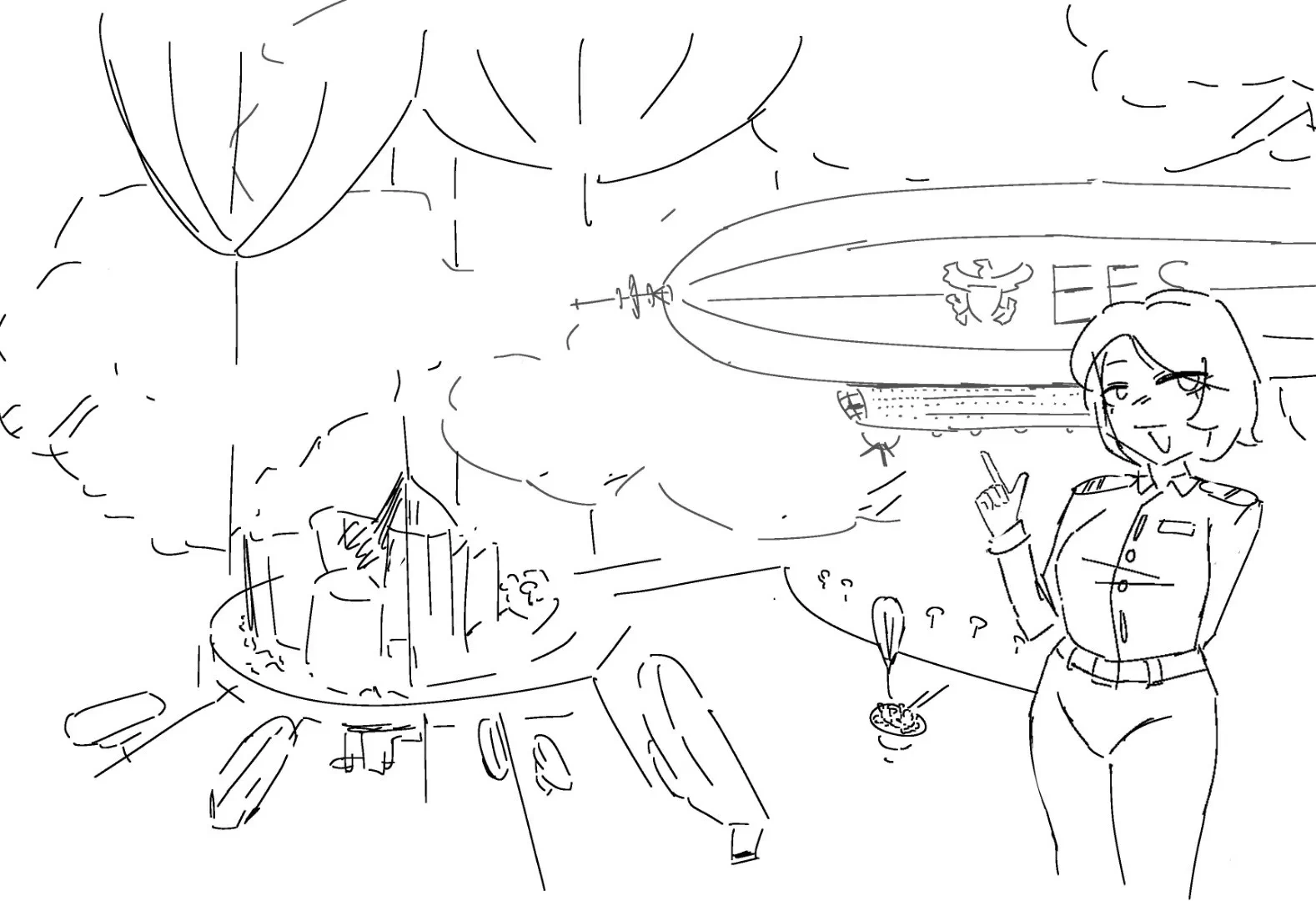
Cool flying spy craft.
Hawk spent much of its campaign building resilience, improving readiness and developing its military capabilities. Lighthouse reached a successful major prototype test. It wasn't a whole operational fleet, but that progress still mattered.
We barely tested large-scale fleet combat during CITS. I'd rather admit that than claim the combat system was proven perfectly balanced.
Schwalbenheim had spent much of CITS modernizing and developing foreign relationships. Then its Military department attempted to seize power.
The president escaped custody. Police resisted. The wider military did not simply fall into line, and some support the plan assumed it had never actually been secured. The coup failed.
Meanwhile, Economy had prepared banking measures that helped stop the crisis from turning into a much bigger financial collapse. One department was trying to overthrow the government; another was trying to keep it financially functional.
The ruling also exposed a problem on my side: I processed too much of that crisis without giving the players a chance to respond to new developments. More on that below.
CITS was my second time running a War Room game, and I was pretty happy with how much players could actually change. Projects I hadn't planned for became real parts of the setting, and the smaller countries weren't just there for Eagle and Hawk to fight over.
But I also made things unnecessarily difficult at times. Some complications belonged to the fictional governments; others were just me changing systems while everyone was already playing. That's worth remembering too.
I moved Final Orders between Discord and spreadsheets, added exceptions, and eventually moved them back again. Players should not need to keep relearning how to submit a decision.
I gave the impression that there were several turns left, then announced there would be no normal Turn 7. Ending CITS around Turn 6 made sense to me. The warning did not.
During the Schwalbenheim coup I processed too much in one go. The failure was supported by the situation, but I should have paused once new information made another senior decision possible.
F.I.S.H. ended in a strong position, but some of its players had less to do than they deserved. Strategic success and an interesting turn are not automatically the same thing.
People should be allowed to do something I haven't thought of yet. It still has to work with the actual people, resources, time and institutions in the world. And if the preparation really was good, I shouldn't manufacture a failure just to make the turn more dramatic.
ADAPTED FROM THE CITS Project Director'S CASE REVIEWThese are from the end-of-game feedback, not invented endorsements. There were criticisms too, particularly about the order system and sudden ending.
“War Room is a room without any war. 10/10 cold(ish) war simulator, would defend Carke again.”
“it WILL be slow. turns take IRL days for you to think and about as much if not more for GM to decide, but it does actually feel like you are impacting shit either as diplomacy or economy.”
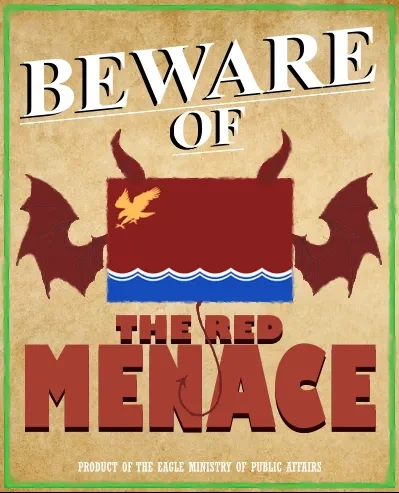
People also drew things. These were made by actual War Room players, not sourced as generic illustrations for a website. The pictures deserve to be shown properly, with their artists credited.

Thanks for the plans, the arguments, the weird projects and the extremely serious national concern over ice cream. The things we got right, and the things we didn't, are all part of the record.